Parkinson-Plus syndrome
Elena KnowsParkinson-Plus syndrome is the diagnosis given to Elena after a two-day hospital evaluation, naming an illness whose swift progression has already begun to reorganize her life. The novel renders the condition not only as a medical prognosis but as an accumulating loss of ordinary abilities: dressing, moving, looking up, and managing daily routines without help.
Diagnosis and prognosis
At Dr Benegas’s recommendation, Elena is admitted to the hospital for a battery of tests. The team takes blood, performs an MRI, checks her reflexes and observes her movements. Dr Benegas explains that Parkinson’s cannot be confirmed or measured by one definitive test; its presence and progression must be assessed clinically. After the evaluation, he tells Elena and Rita that she has a particular type of Parkinson’s, which he calls Parkinson-Plus. The conclusion comes after a team assessment involving Dr Benegas and ten residents, but the diagnosis offers no cure or precise test that can establish how far the disease has advanced.
Dr Benegas warns that Elena’s illness will progress faster than expected. He anticipates that she may soon be unable to get out of bed, feed herself, or use the bathroom without assistance; that her food may need to be liquid or semi-liquid; and that her speech may become difficult to understand. He also raises the possibility of memory loss and dementia symptoms. Because Rita works, he advises her to consider arranging care for her mother as soon as possible. The prognosis makes the disease a forecast of changing needs as well as a name for Elena’s condition.
Progression through daily life
Elena’s earlier signs appear modest beside the later prognosis. At first she has a slight shuffle, and medication can help her get moving. Then she cannot guide her left arm into the sleeve of a jacket. She responds by wearing a shawl or poncho, turning a practical adjustment into a refusal to let the lost movement dictate what she wears. At a monthly Parkinson’s support group at Hospital de Clínicas, she and Rita see patients whose symptoms suggest what may lie ahead. Elena does not recognize herself in any one of them, but leaves with a clearer sense of the future she may face.
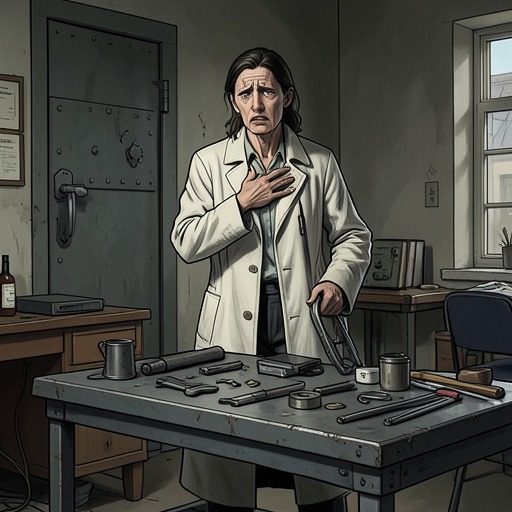
In the present, the effects have spread across movement and self-care. Elena’s neck stiffens and pulls her gaze downward; she struggles to look ahead, and drooling makes a handkerchief and bib part of her routine. Getting around and completing everyday tasks require adaptations: ropes to help her stand, neck braces to lift her chin, toilet-seat attachments, and medicines that support swallowing or make other medication more effective. Levodopa can help her take the few steps she manages, but it does not restore the independence the disease has taken. Each aid answers a specific difficulty without changing the underlying course.
Care, adaptation, and dependence
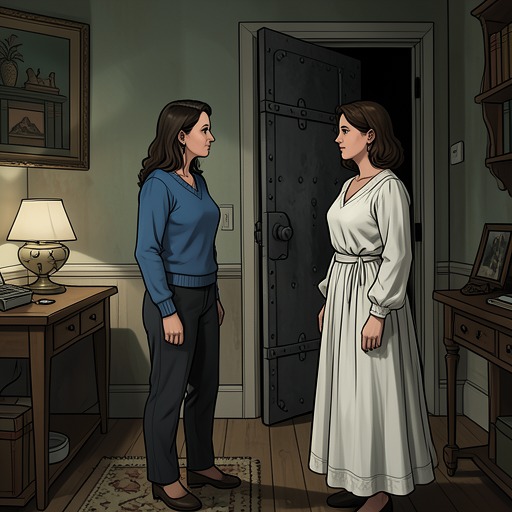
The diagnosis alters Rita’s role as well as Elena’s. Dr Benegas’s warning that Rita may need to arrange care while she is at work turns a future possibility into an immediate family question: how Elena will be looked after, and what that responsibility will ask of her daughter. Rita challenges the doctor to account for the many losses already present, while Elena insists that she wants to remain in her own home. Their exchange shows that the illness has no single experience: Elena faces the narrowing of her bodily independence, while Rita faces the prospect of providing increasing care.
The novel also sets medical advice beside the small, improvised work of living. A pamphlet discusses distress in both patients and caregivers and proposes relaxation exercises; Elena privately finds its suggested calming mantra less apt than a blunter expression of frustration. Advice about activities becomes a mental list shaped by what she and Rita actually do or could do. When she cannot open a bag of pasta by hand, she uses a knife; when draining the pasta, she adds the task to her own list of achievements. These details make adaptation concrete without suggesting that ingenuity can reverse the disease.
Narrative significance
The illness is filtered through Elena’s attention to her own body. She names the stiff neck muscle, notices the effort required to move her eyes, and recalls how a sleeve once became impossible to put on. The narrative’s focus on these specific movements gives clinical decline a domestic scale: change is registered in clothes, utensils, mobility aids, and the effort needed to complete a familiar task. Elena personifies the illness as Herself, an adversary that imposes its commands, while her mockery and practical adjustments mark attempts to retain agency within severe physical limits.
That perspective also distinguishes knowing the diagnosis from living its consequences. The support group gives Elena a glimpse of what may come; the hospital team supplies a prognosis; and pamphlets offer general guidance. None replaces the knowledge formed through her changing capacities. Parkinson-Plus syndrome therefore connects the novel’s medical account to its portrayal of time, dependence, and care: the future arrives through repeated changes in what Elena can do, while the demands of that progression fall on both mother and daughter.